The year 1222 holds significant historical importance due to pivotal events across continents, shaping socio-political landscapes and cultures. From Asia to Europe, 1222 influenced the development of empires and trade networks, underscoring its crucial role in global history. This guide delves deeply into these impacts, examining key developments and their long-lasting effects on our world today.
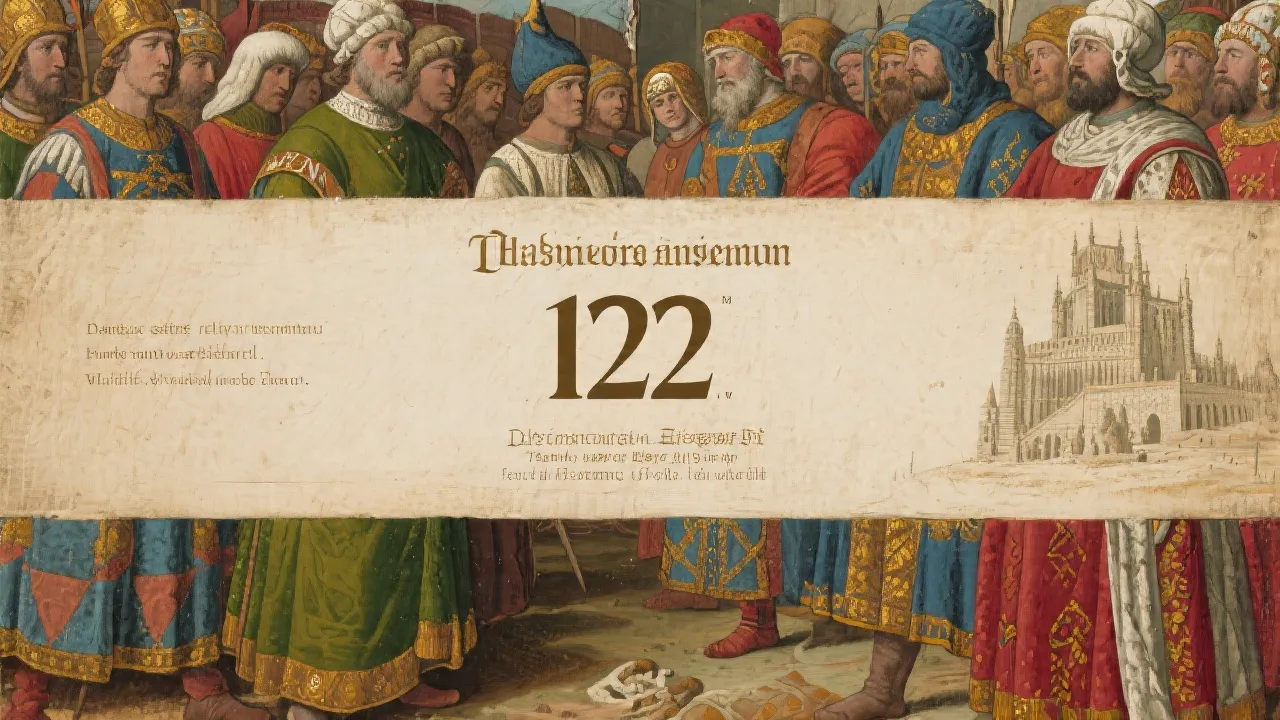
The year 1222 marks a pivotal point in history, characterized by several key events that shaped various regions. This article explores these occurrences, providing insights into how they transformed the political, cultural, and economic landscapes of the time. The interconnectedness of the medieval world becomes vividly apparent in this year, with each thread woven intricately into the broader tapestry of human history. The significance of 1222 lies not only in isolated events but in the cumulative effect they had on subsequent developments across continents.
In 1222, significant political changes took root across Asia and Europe. One notable event was the convening of the Golden Bull in Hungary by King Andrew II. This seminal charter laid the groundwork for constitutional governance by limiting royal power and establishing rights for the nobility. It stands as one of the first parliamentary documents, illustrating an early move towards balanced power structures that would evolve over centuries. The implications of the Golden Bull extended beyond Hungary, influencing political thought in neighboring regions and serving as a beacon for the growing demand for rights amongst nobility throughout Europe.
The political landscape in Europe during this period was marked by increasing tensions between monarchs and nobles. The rise of feudalism had created a complex hierarchy where power was often contested. The Golden Bull sought to address these tensions by ensuring that the rights of the barons were enshrined in law, thus creating a precedent for parliamentary governance. This document would eventually inspire similar reforms throughout Europe, notably influencing the Magna Carta in England a few decades later. As such, it is crucial to consider how 1222 served as a litmus test for the evolving dynamics of power and governance across the continent.
Meanwhile, in England, the repercussions of the events in Hungary were subtly felt as movements for constitutional reform began to gain traction. The concept of limiting the powers of the crown echoed in the larger narrative of the struggle between monarchy and noble rights, leading to heightened debates on governance, representation, and the role of the church in the political realm. This period of political awakening was not limited to England and Hungary; it resonated throughout Europe as various kingdoms grappled with the balance of power.
The year 1222 was also marked by substantial religious undertakings, particularly within Christianity and Islam. Noteworthy was the Mongol Empire's continued expansion under Genghis Khan, which facilitated cross-cultural interactions through conquest and trade. These interactions spurred the exchange of ideas, goods, and technologies across Asia, Europe, and the Middle East, leaving a lasting impact on art, science, and religion. The Mongolian military campaigns were not merely acts of conquest; they were also pathways for cultural exchange, enabling the flow of not only goods but also philosophical thought, artistic expression, and religious beliefs.
Within the context of religion, the spread of Buddhism alongside Islam and Christianity provided fertile ground for syncretism. The encounters between various faiths led to a rich blending of traditions in regions such as Central Asia, where the Silk Road facilitated dialogues among different cultural and religious entities. This exchange fostered a spirit of inquiry and innovation, as ideas traveled along trade routes, transforming societies by introducing new perspectives and practices. The result was a period of cultural reawakening where artists and intellectuals could draw inspiration from a diverse array of influences, leading to unique works that embodied this vibrant interplay of cultures.
The writings of medieval scholars such as the noted Persian historian Juvayni and the Muslim philosopher Ibn Sina (Avicenna) illustrate how cross-cultural interactions enriched intellectual endeavors. Their works, influenced by both Islamic and Greco-Roman traditions, would later lay the groundwork for the European Renaissance. As these cultural currents flowed, the year 1222 emerges not just as a time of conflict but as an era of mutual enrichment that altered the course of intellectual and artistic development.
Economically, 1222 witnessed transformations that influenced trade routes and markets. The expansion of the Mongol Empire played a significant role in enhancing the Silk Road's efficacy, allowing for increased trade between the East and the West. This period provided a catalyst for economic growth and the spread of goods such as silk, spices, and precious metals, fostering a robust commercial network that laid the foundations for future economic systems. The Mongol Empire’s vast territory enabled safer passage for traders, culminating in trade fairs and increasing commerce, which, in turn, stimulated local economies across Asia and Europe.
The introduction of new goods and materials invigorated markets. The demand for silk reached unprecedented heights in Europe, leading to further innovations in textile production. Similarly, the spice trade flourished, with exotic spices becoming symbols of wealth and status in European courts. As prices fluctuated and trade routes diversified, the economic landscape began to resemble a more interconnected network, linking previously isolated regions. This interconnectivity is essential to understanding the emergence of a nascent global economy that would characterize the later Middle Ages and early modern period.
The emergence of merchant guilds further facilitated these economic developments. These guilds, which organized trade practices and set standards for quality and pricing, played an essential role in regulating commerce and protecting the interests of merchants. The influence of these organizations in cities such as Venice, Florence, and Ghent would later contribute to the rise of capitalism and establish a framework for modern economic practices. By 1222, the seeds of a commercial revolution were being sown, one that would have far-reaching implications for Europe’s transition into the Renaissance and beyond.
| Region | Event | Impact |
|---|---|---|
| Europe | Golden Bull of 1222 | Established constitutional governance precepts and noble rights. |
| Asia | Mongol Expansion | Enhanced trade and cultural exchange across continents. |
| Middle East | Trade Route Development | Strengthened economic ties between distant regions. |
The events of 1222 exhibit a lasting legacy, influencing modern governance frameworks, cultural exchanges, and global trade networks. The year serves as a noteworthy chapter in world history, offering valuable lessons on the importance of political innovation, cultural openness, and economic integration. Understanding these historical narratives aids in appreciating the complex tapestry of contemporary global interactions and the historical precedents that shaped them.
The Golden Bull of 1222 not only laid a foundation for Hungary’s governance but also inspired movements toward constitutional democracies throughout Europe. The document’s emphasis on rights and limitations on power echoed across borders, leading to a greater dialogue on the nature of governance. Historical figures such as Thomas Jefferson and Montesquieu, who later shaped the idea of democratic governance, drew upon the legacies of such landmark documents as the Golden Bull. Thus, 1222 stands as a crucial moment that contributed to the philosophy of governance in the Western world.
Furthermore, cultural exchanges initiated during this time played a critical role in bridging the divide between the East and West. The paths forged through the Mongol Empire facilitated not just trade but also the transmission of knowledge, such as advancements in mathematics, astronomy, and medicine. Through the interactions of diverse cultures, the foundations for the Renaissance were quietly being laid, as Western Europe began to embrace ideas and innovations from the East.
The economic transformations that took place in 1222 continue to resonate in today’s global economy. The routes established during this period not only enhanced trade but also laid the groundwork for the connections we see in our modern economic systems. The shift from feudal economies to more dynamic market-based systems can be traced back to such historical moments, where a new emphasis on trade and commerce began to redefine social and economic relationships in profound ways.
Why is the Golden Bull of 1222 significant?
It was one of the earliest documents to limit royal power and promote governance by law, forming a prototype for constitutional documents that influenced governance models in subsequent centuries.
How did Mongol expansion affect global trade?
The expansion broadened the connectivity of the Silk Road, increasing the flow of goods and ideas between different cultures, significantly enhancing the economic interactions of the time.
What were the cultural impacts of events in 1222?
The increased interactions facilitated by Mongol conquests and trade networks led to a cross-pollination of art, science, and religious thought, fostering a rich exchange that would significantly influence future generations.
How did the economic changes in 1222 influence future developments?
The expansion of trade routes and the emergence of merchant guilds contributed to the rise of early capitalism, altering the economic landscape and laying the foundation for the market economies of the later Middle Ages and the Renaissance.
What lessons can we learn from the historical significance of 1222?
The interplay of political reform, cultural exchange, and economic transformation in 1222 demonstrates the importance of adaptability and cooperation in fostering societal advancement and resilience.



The year 1222 holds significant historical weight, marking events that shaped medieval society. From political upheavals to cultural shifts, this article delves into the multifaceted aspects of 1222, providing an expert analysis. Through various lenses including socio-economic dynamics and geopolitical transformations, 1222 is explored from multiple angles to provide a detailed understanding of its impact back then and its legacy in contemporary times.

This guide delves into the year 1222, highlighting its significance within the medieval era. The year is pivotal in medieval history, marked by significant socio-political and cultural developments. These events shaped a transformative period in European society, with notable occurrences that influenced subsequent centuries.
The year 1222 holds significant historical importance due to pivotal events across continents, shaping socio-political landscapes and cultures. From Asia to Europe, 1222 influenced the development of empires and trade networks, underscoring its crucial role in global history. This guide delves deeply into these impacts, examining key developments and their long-lasting effects on our world today.